
Holocene
A physician looks at medicine, religion, politics, pets, & passion in life

 It haunted him, without mercy.
Strong, athletic, handsome, and personable, he seemed at life’s outset to be unfairly advantaged. His friends were many; a ladies man, by reputation, the life of every party, the love of every woman who gazed on him.
He was, by nature, a generous and gentle soul, a gift he received from his parents, humble and devout. He himself found religion attractive, and attended synagogue regularly with them. He had little use for the priests and the lawyers––he found them legalistic, arrogant, and judgmental––but embodied in his faith he discovered a formula for living: obey the law of God, and your life will be healthy and prosperous. Did not the Proverbs promise, “By humility and fear of the Lord are riches, and honor, and length of days”? He would do his part, and God His, and all would be well in life.
The climb had been arduous. Stronger and more agile than his friends, he had reached the top of the cliffs before them. His best friend, struggling behind him, lost his footing, and he reached back to save him from falling. His friend was saved — and his own life changed forever.
When he came to, he felt no pain — in fact, no sensation whatsoever. He heard the shouts and the dislodged rocks of his friends scrambling down the cliff; he tried to get up, but could not. He had survived the fall — and lived to wish he had not.
Weeks and months passed, with no improvement; his paralyzed body remained lifeless, though his mind, now a tortured prisoner, remained fully alive. Most of his friends drifted away, their discomfort in his presence so palpable that their absence was more relief than regret. The Four remained, though he saw no reason for them to do so, other than guilt, or some pathetic sense of charity to the crippled. His limbs withered and shriveled, twisted like the branches of those ancient trees on the cliffs. Racked by fevers, festering pressure sores, and wallowing in the excrement he could no longer control, he no longer had a life, but only a slow, agonizing, and hopeless descent toward death.
The Four visited him daily, alone, in pairs, and on occasion collectively. They cleaned him, tended his wounds, and tried to encourage him in his deepening depression, to no avail. As shriveled and twisted as his body had become, his soul became far more foul and fetid in its unquenched and raging bitterness. Self-pity, self-loathing, and a hopeless despondency descended upon him, crushing and torturing his spirit in a personal living hell. His friends prayed, read Scripture, and feigned faith in some deliverance of spirit, if not body; this only increased his cynicism and the sputtering rage he spewed toward God. How could a good God allow such an evil fate? Had he not kept his part of the bargain, only to be betrayed by a deity he had once trusted? Why did his friends torment him with this utter nonsense?
Then there was the humiliation he suffered at the hands of healers, who prayed and pranced and called down Heaven’s power to heal him; he had too little faith, they accused, when their futile foolishness failed. In this, they were most surely correct. Then, the day his friends dragged him to the Temple, to the priests, as Moses had prescribed. His bondage arose from hidden sin, they said: his own, or his parents. What sin was this, he challenged? The sin of saving a friend’s life? His parents had more righteousness in their little fingers than these prattling and pretentious fools — where was their repentance? The self-righteous religious cast him out of the Temple, and the long journey home was silent, and awkward, and hopeless.
The crowds were immense, if the stories be true — this charlatan must have some slick magic up his sleeve, and there was no shortage of gullible fools in the world to follow along. His angry protests were to no avail — must he go through this humiliation once again? — as the Four lifted him onto the cart and began the dusty and agonizing ride to ridicule. See the Master? Not even close — they could barely see the house for the mob. The Four muscled their way through the grumbling crowd, and ignoring the shouting owner, climbing a fig tree by the house. Before he could protest yet again, they lifted him onto the roof, nearly dropping him in the process — what a fitting and ironic end to his pathetic life that would be! Now what? They began to claw at the straw and tiles; curses arose from below as mud and straw and shards of clay tumbled onto upturned faces. Then they lowered him into the darkness.
He saw their eyes first: seated above the crowd, dressed in fine linen robes, their phylacteries glittering with fiery jewels, their eyes blazing with hatred and contempt seemingly from the very depths of Sheol. Then, turning, he saw at last the healer’s eyes: strong, kind, penetrating to the depths of his spirit. To see them was to gaze into eternity, and see its joy. He felt utterly naked — but not ashamed.
He smiled: “Son, your sins are forgiven.”
There was no challenge this time — he knew the sins of which the healer spoke: bitterness, unforgiveness, cynicism, ingratitude, the hatred of God, of life, the despair over lost promise and shattered hopes. There befell then a lightness, an extraordinary peace, the lifting of a burden far heavier than that his friends had borne in bringing him here. A smile crossed his face, for the first time in many years: could this be joy?
Amazed at his inner awakening, he failed to hear the gasps, to notice the stunned silence of the once-noisy crowd. There was only the angry, strident whispers, hushed at first, then ever more intense, like the growl of a ravenous predator: Blasphemy. Blasphemy! BLASPHEMY!
He looked back at the healer: there was no fear, no anger; naught but an enormous strength, his eyes afire with the conviction of truth. “That you may know that the Son of Man has the power on earth to forgive sins…” He looked directly into his eyes: “Arise, pick up your mat, and walk.” It was far more invitation than command.
It lasted but an instant, but seemed an eternity. Great warmth seared through his withered flesh. Tendons tight as iron loosened and stretched; his shriveled muscles softened and fleshed out; his papyrus-thin skin pinked and plumped into a vibrant glow. He sat up — before realizing he could not do so. Swinging his legs free, he stood — he stood!! — bent over, and rolled up his mat.
The crowd gasped, and cried, and praised God; he heard none of it, not even the joyful shouts of his friends on the roof. As he bounded out the door, every hand reached out to touch him, as if he, the healed, had the power of the healer. As the sounds of the crowds faded into the distance, he touched his newborn limbs, still stunned in disbelief about what had just happened.
There was much work to do; relationships to repair, amends to make, and the endless telling of his story to the amazement of all who would listen. He followed the Master throughout Galilee wherever he preached. Sitting among the thousands, he nevertheless saw Jesus look directly at him each time, and smile. It seemed as though the Master had even more joy at the healing of his crippled heart than he himself did — and his own was indescribable.
Many months after his healing, he wandered again into the desert, alone. The storm clouds were gathering: the hatred he had seen in the eyes of the religious leaders was ever more intense, and he sensed something dark and foreboding ahead in his Master’s mission. His own journey led him back to the cliffs, where his life had changed forever. His eyes gazed upward at their great height, then slowly descended to the rocks of brokenness below. He recalled his Master’s words, spoken so prophetically: “Greater love than this no man has, than to lay down his life for his friends.”
And finally, at long last, he understood.
 A reader named Katherine recently e-mailed me. She had lost her husband, a man some years older than she, to multiple myeloma and Alzheimer’s disease. She is a Christian, and is struggling to make sense of his death, and the difficult questions of why God allows suffering. She writes, after giving me some details of his life, death, and fine character, and asks:
Why does God allow such terrible illnesses to such a kind person? I know there is really no answer as I know all about Job. The thing I am really afraid is that I prayed for his healing, and it did not happen. When I became a Christian back in the 80’s, the health and prosperity gospel was big at the time, and I guess it really influenced me more than I care to admit as I now know it is false. Even though I know it is false, I have become obsessed that God did not answer my prayer because of not being able to get rid of all the sin in my life (as if this were possible to do). One of the teachings of that movement was that if your prayer for healing went unanswered it was either because of lack of faith or sin in your life. I kept thinking that I don’t always put God first in my life, and that I spent more time reading secular magazines than reading my Bible and listening to more secular music than Christian music. These were my “main” sins, at least in my mind and thinking. Can you shed some light on this for me? I would be very appreciative.
The problem of suffering and evil is an ageless one. It poses a particular challenge for Judaism and Christianity, because of the seemingly insoluble tension between a world filled with suffering and evil, and the belief in a God who is good and all-powerful. Solutions to this dilemma, both adequate and inadequate, abound. It is the desperate hope of the atheist that this logical incompatibility proves beyond question the nonexistence of God. Others, less willing to ditch a Divine order, have concluded that God is good, but impotent; or that God is detached and uncaring, or capricious, or moody, or sadistic — and therefore not good.
It must be said plainly that answers to this paradox are neither simple nor entirely satisfactory. The dilemma as it stands may be solved in a global and satisfactory way — as has been done by both Judaism and Christianity — but invariably the lofty principles seem to break down at the moment when a solution is most needed: in the time of crisis when we ourselves experienced the depths, hopelessness, and irrationality of suffering in our own lives. CS Lewis, whose tightly reasoned treatise The Problem of Pain provides an extraordinarily deep and thorough discussion of this dilemna–later in life nearly repudiates his faith and sound theology after the death of his wife, a process painfully detailed in his diaries, A Grief Observed. It is indeed unsettling to watch Lewis discard all of his carefully reasoned and theological understandings of pain and suffering in the brutal crucible of unbearable pain and loss. Nonetheless, he ultimately comes to terms with the paradox, and undergoes an embracing of this profound dilemma far deeper than the intellectual by means of his own trial of fire.
At the heart of this difficult issue lies the human heart. God undertook a vast and dangerous experiment when creating man: He wanted, not merely another animal — of which there were countless — but an animal capable of something He alone understood: love. He gave this exalted animal vast intellect — but this was not sufficient to engender love. He gave His creation powerful emotions, the capacity for both creation and destruction, which He alone had possessed — but this also was not sufficient. For love — the utter, uninhibited emptying of self for another — required that most dangerous license of all: free will. Having created us thus, designed with the capacity to love, we must of necessity be utterly free to choose — for choice is the very heart, the very essence of love.
It was, by all visible measures, an experiment gone wildly awry. Having given this creature the extraordinary capabilities required to love fully — intellect, emotion, passion, empathy, the ability to feel intense pleasure and pain both physically and spiritually — he set this creature free to love — first of all Himself, and then others of like kind. And the first choice of this masterpiece of creation was the decision to turn away: to replace the intended objects of love with the sterile altar of self. Thus was unleashed the monstrous liability of a truly free creature: the ability to hate, to cause pain, to kill, to destroy.
A world in which God eliminated evil would by necessity be emptied of all mankind.
If we are to be honest, much of the pain and suffering which comprise the evil of the world is due to nothing more than this: that man, having been given the ability to choose, chooses wrongly, and uses the gifts and abilities given for the purpose of love to instead elevate himself at the expense of others, often in ways stunningly malicious and utterly wicked. Look around you, at the world both near and far: pride, selfishness, greed, lust, rage, jealousy — all these things manifest themselves in our lives and those of others, causing great pain and endless suffering. The child abused; the wife abandoned; the drive-by shooting; the greedy CEO who bankrupts the company and rapes the stockholders; the serial killer and the rapist; genocide; wars of conquest; torture; senseless massacres: these are the actions of men and women putting self above others — and each of us does it, to a greater or lesser degree, though we minimize our own roles to justify our own actions. We all wish for a world where God would eliminate evil — but all assume that we ourselves would be the only ones left standing when His judgment is delivered. A world in which God eliminated evil would by necessity be emptied of all mankind.
Yet there also exists those evils which have been called, in days past, somewhat ironically, “acts of God” — those circumstances or events which cause pain and suffering, not directly engendered by human evil. Thus the child is born with a severe birth defect; hurricanes, earthquakes, and tornadoes cause death and destruction; chronic and devastating diseases fall upon those who seemingly deserve a far better fate. It is with this, this seemingly capricious evil, with which we struggle most earnestly, straining to understand, yet to no avail.
Judaism and Christianity both imply that some such evil may be consequential, the result of punishment or predictable consequences for the malfeasance of man. A more robust theology is less accusatory and thereby more coarsely granular — maintaining that such evil has entered the world because of the fall of man. Under such design our divine divorce has corrupted not only behavior, but our very natures, and all of creation. Yet such theology is of little comfort to those who are the objects of such seemingly random evil; we demand to know of God, “Why?” — and in particular, “Why me?” Yet there is no answer forthcoming, and we are left assuming a God either powerless to stop such evil or unwilling to do so.
Yet the problem of a good God, an omnipotent God, and an evil world of His creation is not entirely insoluble. Much lies in our projection of human frailty onto the nature of the Divine, and the impreciseness of our definitions of good and omnipotent. When we say God is good, we tend to mean that God is “nice” — that he would never do anything to cause us pain or suffering. Yet even in our limited experience, we must acknowledge that pain and suffering, while not inherently good, may be a means to goodness. We choose to have surgery or chemotherapy, though painful and debilitating, that our cancer may be cured. The halls of Alcoholics Anonymous are filled with men and women who, having faced both personal and relational destruction, have used their former liabilities as a gateway to a new, more fulfilling life — one which could not have taken place apart from their harrowing journey through alcoholism. To a misbehaving child, the discipline of a loving father is not perceived as good, but such correction is essential for the development of personal integrity, social integration, and responsibility.
Our inability to discern the potential for good in pain and suffering does not by necessity deny its presence; there are many who, when asked, will point to painful, difficult, and unbearable times in life which have brought about profound, often unexpected good in their lives, unforeseeable in the midst of their dark days. There surely is much suffering which defies our capacity to understand, even through we strive with every fiber of our being to find the goodness therein. But the fact that such inexplicable suffering exists, and that answers are often lacking, does not preclude the possibility that God is good, or that such suffering may ultimately lead to something greater and more noble than the pain endured.
We are … not merely imperfect creatures that need improvement: we are rebels that need lay down their arms
In our egocentricity we often neglect to look for the benefit in our suffering which comes not to us, but rather to others. Caring for someone suffering unbearably provides an opportunity to the caretaker to experience selfless love, compassion, tenderness, patience and endurance — character traits sadly lacking in our selfish world, which routinely turns its back on suffering to pursue an untroubled life of self-fulfillment and self-gratification. It is not inherently evil to be called to give beyond our means and ability — as caring for someone suffering always demands — for in the exhaustion and inadequacy thus revealed, we may discover unknown inner strengths, and come to a richer, and more fulfilling dependence on God. We are, as CS Lewis so accurately described, “not merely imperfect creatures that need improvement: we are rebels that need lay down their arms” — and finding how shallow are our reserves of love, compassion, and strength, we may through this brokenness seek to acquire them, humbly, from their Source.
But surely an omnipotent God has the power to stop suffering — is He not either impotent or evil when failing to use such power to remove our suffering? The omnipotence of God, like His goodness, is but dimly perceived. For the power of God is in perfect harmony with the purpose of God, and is thus used to advance these purposes for the greater good. Thus, the good deed of creating man with free will — and thereby capable of love — by its very nature restrains the omnipotence of God to violate that free will. The evil of the world exists in large part, if not wholly, because this free will has been abused. Yet the abuse of free will must be permitted, that the proper use of free will — the laying down of arms, the surrender to the sovereignty of a wholly good God — may take place, freely and unfettered as required by love. God must tolerate the existence of suffering and evil, that all may have the freedom to choose the good — though many will refuse to do so.
Yet he does not merely tolerate the presence of suffering, but provides for its very redemption: that suffering, though itself evil, may ultimately produce good. Thus pain, suffering, death, and evil need not triumph: they may provide the means that some may turn toward the good, or bring forth further good for themselves or others. This is redemption: to buy back that which is destructive, worthless, of no value, evil, and make it worthwhile, valuable, even priceless.
Christianity, throughout its history, has struggled with and largely resolved the problem of pain, within the confines of the mystery of God. Yet Christianity in its many doctrinal eddies has sometimes chosen the wrong path and the wrong answers to this challenge. Such errors generally fall into two broad categories: the concept of suffering as punishment or retribution from God, and the manipulation of God for man’s gratification. The first of these runs counter to the core doctrine of the cross: that God has chosen to provide in Christ a sacrificial lamb — that Christ, through his suffering, may bear the justice of God, so that we may see the mercy of God. Our suffering is not a punishment for sin, as such punishment negates the purpose of the cross. Correction, it may be; discipline, it often is; opportunity, it always is; punishment, it never is.
The countering position — that of God as divine opiate, ever present to kill our pain — is a variant of the faith which has become perniciously widespread, feeding on a culture of ease and self-gratification which creates God in its own image. Thus God becomes a font of wealth, of health, of prosperity, of a trouble-free materialistic lifestyle, a divine vending machine whose coinage is faith. Faith, however, in such a worldview is no longer a profound trust in a God who is beyond understanding and infinitely wise, but becomes instead a means of buying from God all which we demand. Hence, we may be wealthy, if we only have enough faith; we may be healed, if our faith is sufficient; we will not suffer if we will but strengthen and enlarge our faith. Our faith must be prefect, lest our pleas go unheard. The strength of faith matters more than its verity; we charge the gates of heaven with the bludgeon of self-will.
The perniciousness and destructiveness of this perversion of historical Christian faith lies in removing from the hands of God decisions of life and death, health and illness, wholeness and suffering, while burdening us with the hopeless demand that we steel our faith to impossible heights to coerce and manipulate the will of God. That such efforts are typically fruitless seems self-evident: God most surely is capable of healing — and does indeed do so often, even dramatically at times — but most surely does so in accordance with his divine wisdom and will. Should His wisdom dictate that suffering, poverty, brokenness, even death and despair would better serve the purposes of drawing men to Himself, what measure of human obstinacy and recalcitrance will change this will? When such “faith” proves futile, it destroys trust in God, and not infrequently leads to utter loss of belief, a bitter agnosticism born in false expectations and misplaced hope.
We demand of God that which we alone deem to be good, then blame Him when He pursues a greater good beyond our understanding
Hence, we demand of God that which we alone deem to be good, then blame Him when He pursues a greater good beyond our understanding. This is the struggle to which Kathleen is alluding, as she questions the goodness of God in failing to heal her husband, blaming her own “sins” for his untimely demise. To us, such a healing seems only good — in so far as it mitigates our pain and loss, as well as that of those we love — but like the surgeon’s knife, sometimes such pain must not be withheld that evil may be conquered by the good. Were he healed, and restored to full health, would he not then face death on yet another day? Our lives have both purpose and a proper time: we live for that purpose, and we die when that purpose is fulfilled. That those who are left behind cannot grasp that purpose — and appropriately suffer profound pain and loss at this separation — does not negate that purpose nor impede its culmination.
We live in a time when our expectations of health, of prosperity, of a pain-free life are increasingly met in the physical realm, while we progressively become sickly, impoverished, and empty in the realm of the spirit. Despite our longer lives, we live in dread of death; despite our greater health, we obsess about our ills; despite our comfortable lives, we ache from an aimlessness and purposelessness which eats at our souls and deadens our spirits. Though we have at our command the means to kill our pain–to a degree never before seen in the history of the world–yet we have bargained away our peace in pursuit of our pleasure. The problem of pain has never been an easy one; in our day, it has not been solved, but rather worsened, by our delusions of perpetual comfort and expectations of a trouble-free life.
Until we come to terms with suffering, we will not have comfort; until we embrace our pain, peace will never be ours.
An ongoing study of the epistle 1 Peter.
- Letter from an Apostle – Background
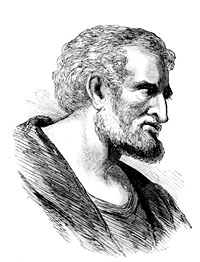
The apostle Peter, one of the 12 apostles of Jesus, appears frequently throughout the Gospels and the book of Acts. He was a fisherman, chosen by Jesus, and one of the inner circle of the disciples. He was present at the transfiguration of Jesus; in the garden of Gethsemane; at his trial, where he denied Jesus; and was appointed by Jesus to lead his Church. By declaring himself an apostle (apostolos)– a specific claim to have been appointed directly by Christ to teach and lead His Church — Peter is declaring his authority to speak on behalf of Christ Himself.
He addresses his epistle to those “chosen” of God and “foreigners”, in areas located in modern-day Turkey. The imagery here is strikingly similar to that used of the Jewish people, who also were spoken of God’s chosen people, many of whom represented a diaspora spread throughout the ancient world.
We do not know if Peter was writing to these churches which he himself had founded, or to Christians whom he had evangelized, or whether he was speaking to those he had never met, in his office as the chief of the apostles. He does not mention specific individuals — unlike many of Paul’s letters — which may suggest he himself had not founded these churches.
The use of the term “foreigners” (or “sojourners” or “pilgrims”) speaks to those who are not natives in the land in which they dwell. This suggests that these were either converted Jews of the Diaspora (for Peter was the apostle to the Jews), or perhaps Gentile Christians who had emigrated to Asia minor. As Peter will develop later in the epistle, however, there is also a sense of the Christian in the world as a pilgrim: a foreigner traveling to a world not his own, while a citizen of heaven.
“God the Father…”
This is shockingly and intensely personal. It is not God the Creator; God the lawgiver; God of judgment; God unapproachable, inscrutable, unknown. This is family: this God, although vastly above us and beyond our understanding, nevertheless considers us children, family, friends. This is a stunning contrast to the religions of this and every age, with gods either mythical, or vengeful, or distant and impersonal. This is a God of profound love, of tenderness, of mercy, of gentleness; a teacher, a guardian, a guide, a defender. Even among the Jews, who worshiped and served the same God, there was no sense of such intimate personality; theirs was the Yahweh of Sinai and the burning bush, a God to be feared and obeyed but surely not befriended. The God whom Peter came to know through Jesus Christ was an utterly new revelation, a profound paradigm shift in man’s understanding of God.
“God the Father knew you…”
We are known: intimately, throughout eternity, in every moment and every aspect of our lives. This is not mere familiarity, nor faint acquaintance: this is full, complete, transparent knowledge, that of the Creator fully comprehending His own creation.
We are known: in all our greed and selfishness; in our gossip and backstabbing; in our anger, and deceit, and hatred, and arrogance. The God of eternity, transcending time, knows our every moment, our every thought, our every action, our birth and death and all that lies between. “Every hair on your head is counted” — there is naught that is hidden, every corner of your soul, every cell of your body is known by God, throughout eternity.
We are known: not only in our deep rebellion and sinfulness, but in the glory which we might bring Him, and His purposes which we may serve. We are known in our fullest and highest potential; the goodness which God can bring about when we are once again restored to Him, empowered by Him, guided and gifted through Him. In this too we are known.
We are creatures of time; we have a beginning, and an end, and the sequence of minutes, hours, and days which pass between, one after another. Yet the God who knows us is above and outside time; He is eternal, unbounded by that which He has created. Every moment of our lives is now for God; He inhabits our past, our future, our eternity with Him yet to come: these are present to Him, who transcends time and redeems it.
“God the Father knew you and chose you…”
To be chosen: to be accepted in whole, unreservedly, unconditionally. This is the very deepest need of man; our rejection by God and man fosters an endless parade of human misery, suffering, pathos and pathology. Our entire lives are spent seeking the acceptance of others, and failing to find in them the acceptance which is our very life. Deep within each of us dwells a bottomless abyss, into which we pour an endless train of insufficient and destructive detritus. We seek to fill the abyss with material goods; with drugs, or alcohol, or food, or sex; we seek relationships, hoping through them to fill that void — then destroy those relationships when they fail to accomplish what they are utterly incapable of fulfilling. Neither power, nor money, nor eminence, nor the esteem of others will suffice. Only to be chosen by God; to be accepted, fully, unconditionally, eternally by Him: this alone fills the despondent destitution within — for that emptiness was made to be filled with naught but God Himself.
And we are chosen, not because we have earned this esteemed position; not because our behavior has made us worthy, nor our status gained God’s attention, nor our inflated self-worth merited his favor and mandated his choice. We are chosen: broken, failures, rebellious, arrogant, fully worthy of utter rejection — yet by grace, plucked from the mire of hopeless self-destruction and empty, purposeless lives, for the sole reason that we are loved, and that this love can transform us from something useless and empty to something purposeful and valued. We are chosen because we are loved, though unworthy, and because we may become empowered by our choosing to manifest that same love to a lost, desperate world.
We were chosen long ago — as we measure time.
Yet the time of our choosing is now, if we will but accept it.